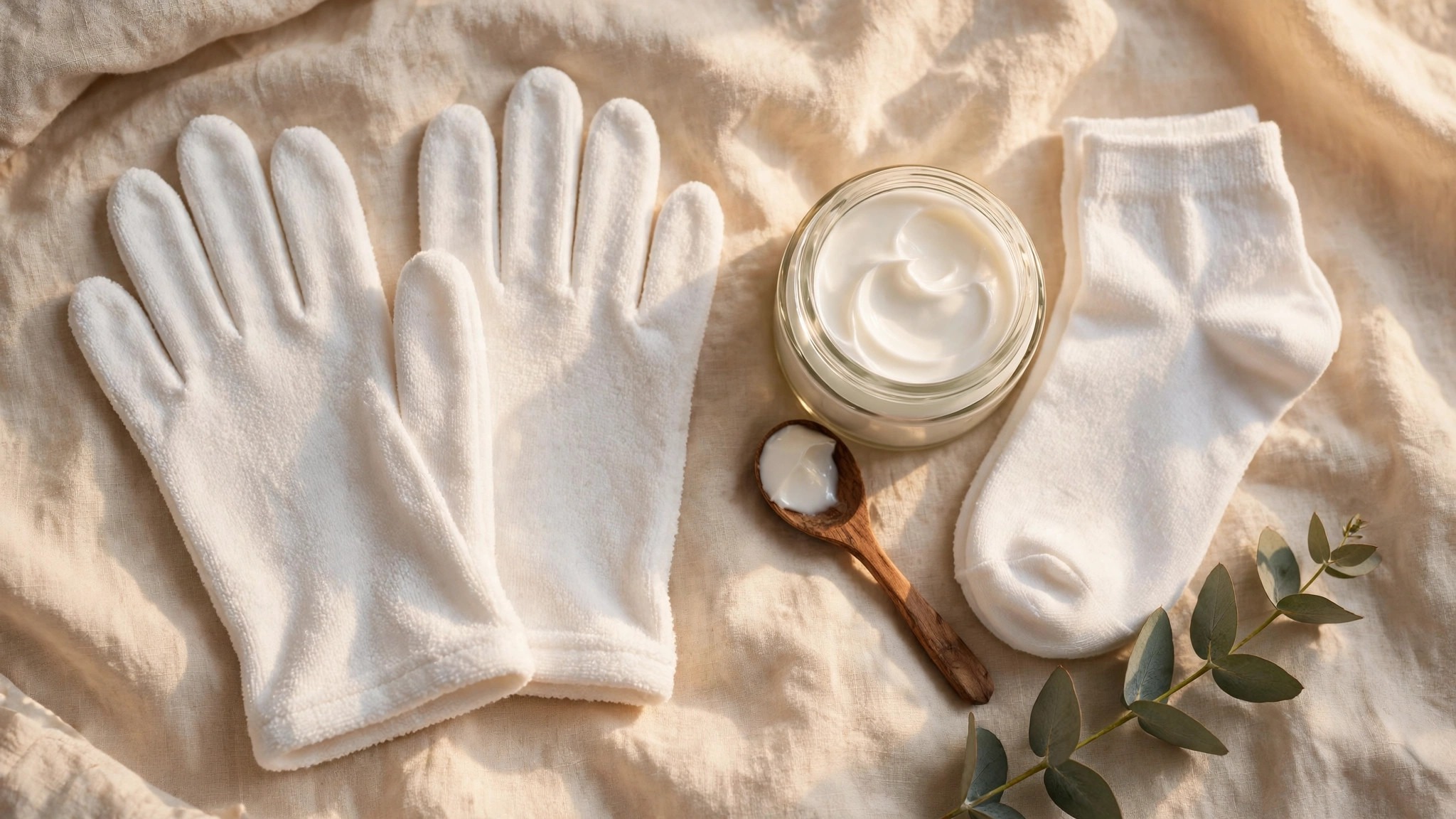
Do Moisturizing Gloves and Socks Really Work? A Winter Skincare Guide for 2026
Moisturizing gloves and socks sound like a gimmick — soft cotton gloves and socks you wear to bed after slathering on hand or foot cream. They look like something from a spa gift basket, not a serious skincare step. But this winter, they are quietly becoming one of the most recommended at-home fixes for dry, cracked hands and heels, and the idea behind them is older than the beauty industry itself.
The short answer is yes, they work — with one important caveat. The gloves and socks do not moisturize your skin by themselves. What they do is keep the moisturizer you already own on your skin for hours, so it can actually do its job. Dermatologists call this occlusion, and it is the same principle they use to treat eczema and psoriasis. Here is how it works, what to put underneath, and who should skip it.
Why Winter Dries Out Your Hands and Feet
Cold air holds less moisture than warm air, and heated indoor air is just as dry — so in winter, water evaporates out of your skin faster than your skin can replace it. Your hands take the worst of it: they are washed constantly, exposed to cold air, and rarely protected. Your feet suffer differently — thick skin on the heels gets little attention, and by February it can crack.
The American Academy of Dermatology recommends using a cream or ointment rather than a thin lotion in winter, with ingredients such as petroleum jelly, jojoba oil, shea butter, glycerin, mineral oil, or lanolin, applied within a few minutes of bathing or washing your hands. The problem is that a thick cream rubs off on your phone, your keyboard, and your bedsheets within minutes. That is the problem moisturizing gloves and socks solve.
How Moisturizing Gloves and Socks Work
Moisturizing gloves and socks work through occlusion — sealing a layer of moisturizer against your skin so it cannot evaporate or rub away. Harvard Health Publishing puts it simply: at bedtime, coat cracked skin on your hands and feet with a thick layer of moisturizer or petroleum jelly and cover with cotton gloves or socks while you sleep. Healthline gives the same advice, noting that overnight treatments let the emollient replenish the moisture and oils your skin needs.
There are three main types, and they work slightly differently:
- Plain cotton gloves and socks. The classic, cheapest option — a few dollars at a pharmacy. You apply your own cream, then pull them on. They keep the cream on your skin and off your sheets, and they breathe well. Their one weakness is that cotton absorbs some of the cream itself, so slightly less reaches your skin.
- Gel-lined gloves and socks. Reusable fabric gloves and socks with a moisturizing gel lining, usually infused with oils such as jojoba, olive, or grapeseed oil, plus vitamin E. Body heat activates the gel, and the lining holds the moisture against your skin. Most brands suggest 20 to 60 minutes at a time, at least two to three times a week, and one set typically lasts around 50 uses.
- Silicone or gel socks. A newer option, especially for feet. The silicone seals cream against the skin far better than cotton — foot-care guides note that cotton “wicks moisture away rather than holding it in.” The trade-off is that silicone is slippery on smooth floors, so these are for wearing in bed or while sitting, never for walking around the house at night.
In October 2025, the Japanese skincare brand Curél even launched dedicated “Boosting Hand Care Gloves” and “Boosting Heel Care Socks” using a two-layer sheet designed to hold cream against the skin overnight — a sign that the idea has moved from home remedy to mainstream skincare.
What to Put Under Moisturizing Gloves and Socks
The gloves and socks are only as good as the cream underneath them. The label matters more than the brand. Look for these ingredients:
- Glycerin — one of the most effective humectants in skincare; it pulls moisture into the skin. Harvard Health lists it among the key ingredients to look for in a winter moisturizer.
- Petroleum jelly — plain, unscented, drugstore-brand. It is one of the most effective occlusives available, and it works best layered over a glycerin-based cream: the humectant pulls water in, the petrolatum seals it there.
- Ceramides — they rebuild the skin barrier, the layer that keeps water in and irritants out. Especially worth looking for if your hands are dry from repeated washing or cold weather.
- Urea (5–10%) — hydrates and gently exfoliates at the same time, which makes it ideal for rough, callused heels and hands. If your heels feel rough rather than just dry, a urea foot cream is the ingredient to reach for.
- Shea butter — softens the outer skin cells and seals in hydration, and it absorbs well overnight without making a mess of bedding.
Avoid anything heavily fragranced under occlusion. A fragrance or essential oil that feels fine on open skin can irritate when it is trapped against your skin for eight hours. If your skin is already cracked or stinging, stick to the plainest cream you own — or plain petroleum jelly — until it calms down. The same rule applies to lips in winter: when skin is already stressed, introduce one new product at a time, as our guide to healing chapped lips in winter explains.
How to Use Moisturizing Gloves and Socks: Step by Step
The routine takes about two minutes, and most people notice softer skin within a few nights. Here is how to do it properly:
- Wash with warm water, not hot. Hot water strips the natural oils from your skin. Wash your hands and feet with a gentle, fragrance-free cleanser, then pat dry — do not rub.
- Apply cream while skin is still slightly damp. Moisturizer works best on damp skin, so do not wait until you are fully dry. Use a generous amount — more than you would during the day.
- Layer an occlusive on top if your skin is very dry. A thin layer of petroleum jelly over your cream seals everything in. This is the step that makes the biggest difference for cracked heels.
- Pull on clean cotton gloves or socks. They should fit comfortably without feeling tight — gloves that cut off your circulation will do more harm than good. If you are using gel-lined or silicone versions, follow the brand’s instructions.
- Wear them overnight, or for at least 20–30 minutes. Overnight gives the best results because the cream has hours to work. If sleeping in gloves sounds miserable, do the treatment for an hour while you watch something, then take them off before bed.
- Wash reusable gloves and socks regularly. Cotton pairs should be washed after every few uses, and gel-lined versions should be cleaned before wearing them again, or they become a home for bacteria.
For the first week, try three nights in a row if your hands or heels are noticeably dry or cracked. After that, once or twice a week is usually enough as maintenance through the winter.
Moisturizing Gloves and Socks vs. Other Winter Fixes
Gloves and socks are not the only way to fight winter dryness — but they are one of the cheapest and simplest. Here is how they compare with the alternatives.
| Fix | What it does | Cost | Best for |
|---|---|---|---|
| Moisturizing gloves and socks | Seals cream on hands and feet for hours overnight | $3–$25 | Cracked hands, dry heels, overnight repair |
| Rich hand/foot cream alone | Hydrates, but rubs off quickly | $5–$20 | Everyday daytime use |
| Humidifier | Adds moisture to dry indoor air | $30–$100 | Whole-room dryness, face and body |
| Overnight face slugging | Petroleum jelly sealed on the face | $3–$10 | Dry facial skin (not hands or feet) |
| Paraffin wax treatment | Warm wax coats hands for deep softening | $30+ or salon prices | Occasional pampering, very rough hands |
The honest comparison: a humidifier helps your whole body, and a good cream is essential — but neither keeps product on your hands and feet for eight hours. That is the one job gloves and socks do better than anything else. And if your skin feels oily on the surface yet tight and dry underneath, the problem may be a damaged skin barrier rather than a lack of moisture — our guide to oily but dry skin in winter explains the difference and what to do about it.
Who Should Skip Moisturizing Gloves and Socks
Most people can use this routine safely — it is just cream plus cotton. But a few groups should pause first:
- People with diabetes, nerve damage, or poor circulation. Foot-care guides advise checking with a doctor or podiatrist before starting any overnight foot routine, including soaking, pumice, and silicone socks. Reduced feeling in the feet means you might not notice irritation or a blister forming overnight.
- Anyone with open wounds or broken skin. Do not wear gel gloves or socks on open wounds, broken or abraded skin, and check with a doctor first if you have eczema or psoriasis — trapping a product against inflamed skin can make it worse.
- Anyone with a fragrance or latex allergy. Some gel-lined products contain fragrances or latex; check the label, and patch-test any new product on a small area first.
- People who overheat at night. If you sleep hot, a full night in gloves may feel uncomfortable — try the 30-minute version instead. You still get most of the benefit.
If your dry skin does not improve after a week or two of overnight treatments, or if it gets worse, see a dermatologist. Cracking, bleeding, or itching that does not settle can be a sign of eczema or another condition that needs prescription treatment — and no glove will fix that on its own.
How to Choose the Right Pair
You do not need to spend much. A $3 pair of white cotton gloves from the pharmacy works just as well as a fancy set for most people — the cream underneath does the heavy lifting. But a few details are worth checking before you buy:
- Material: Choose breathable cotton for overnight wear. Synthetic fabrics trap heat and do not breathe the same way.
- Fit: Snug enough to stay on, loose enough that your fingers do not tingle. If you want to use your phone while wearing them, look for touchscreen-compatible or fingerless versions.
- Reusable vs. single-use: Single-use gloves and socks come pre-infused with serum-like blends of sunflower seed oil, avocado oil, shea butter, and vitamin E — convenient for travel or a one-off pampering night. Reusable pairs are cheaper over a winter and better for the planet.
- Buy from a reputable seller: As with any trending beauty product, counterfeits and misleading claims follow the hype. Our guide to spotting fake skincare products explains how to check the seller, the batch code, and the packaging before a product touches your skin.
Frequently Asked Questions
Do moisturizing gloves and socks really work?
Yes, in the sense that matters: they make your moisturizer work much better. The gloves and socks themselves add little moisture — they trap the cream against your skin for hours so it cannot evaporate or rub off, a technique dermatologists call occlusion. Harvard Health and Healthline both recommend covering cream-coated hands and feet with cotton gloves or socks overnight. Expect softer skin within a few nights, not a miracle after one use.
How long should you wear moisturizing gloves and socks?
Overnight is ideal, because the cream gets six to eight hours to work. If you cannot sleep in them, 20 to 60 minutes is enough to see a benefit — most gel-lined products recommend at least 20 minutes, two to three times a week. For very dry or cracked skin, try three nights in a row, then once or twice a week as maintenance.
What is the best cream to use under moisturizing gloves?
A thick cream or ointment, not a thin lotion. Look for glycerin, ceramides, or urea (5–10%) on the label, and layer plain petroleum jelly on top if your skin is very dry or cracked. Avoid heavily fragranced products under occlusion, since trapped fragrance can irritate skin over several hours.
Are gel moisturizing gloves better than cotton gloves?
They do different jobs. Gel-lined and silicone versions seal more moisture against the skin, so they can work faster — especially on rough heels. Cotton gloves are cheaper, more breathable, and better for all-night wear, but they absorb some of the cream themselves. For most people, cotton plus a good cream is enough; try gel or silicone if cotton alone is not fixing cracked heels.
Can you sleep in moisturizing socks every night?
You can, as long as the socks are clean, breathable cotton and fit comfortably. Many people wear them nightly through the driest winter weeks, then drop to once or twice a week. Do not walk around the house in silicone socks — they are slippery on smooth floors — and take them off before standing up in the morning. People with diabetes or poor circulation should check with a doctor first.
Do moisturizing gloves help with eczema?
Dermatologists do use occlusion to treat eczema — prescription creams applied under bandages or wet wraps. Cotton gloves over a plain moisturizer can help mild hand eczema by keeping the skin hydrated and protected from scratching. But do not use gel gloves or socks on broken or inflamed skin without medical advice, and see a dermatologist if eczema does not improve, since it may need prescription treatment.
Conclusion
Moisturizing gloves and socks are not a miracle product — they are a simple trick that makes an ordinary cream work much harder. By sealing a thick, well-chosen moisturizer against your skin overnight, they give dry hands and cracked heels the hours of hydration that a daytime application never can. For a few dollars and two minutes before bed, it is one of the best-value winter skincare steps you can add this year. Just choose the right cream, keep the gloves clean, and skip the routine — or see a doctor — if your skin is broken, infected, or not improving.
Sources
- Healthline — Winter Dry Skin: 11 Tips to Help Prevent Dry Skin: https://www.healthline.com/health/winter-dry-skin%23dry-skin-prevention-tips
- Harvard Health Publishing — Try this: Winter skin care: https://www.health.harvard.edu/healthy-aging-and-longevity/try-this-winter-skin-care
- Glam — Moisturizing Gloves: The Overnight Solution To Dry Hands You Probably Haven’t Heard Of: https://www.glam.com/1320363/moisturizing-gloves-overnight-solution-dry-hands/
- Fit and Fab Living — Why You Should Try Wearing Gloves to Bed (And What to Put Under Them): https://www.fitandfabliving.com/beauty/overnight-gloves-hand-care
- Graying With Grace — Foot Care for Seniors With Dry Cracked Skin: Product Guide: https://www.grayingwithgrace.com/senior-dry-cracked-foot-care/
- UW Medicine Health Library — Dry Skin (summarizing American Academy of Dermatology guidance): https://healthlibrary.uwmedicine.org/YourFamily/OlderAdults/Tools/85,P00281
- Kao / Curél — Curél Unveils ‘Boosting Hand Care Gloves’ and ‘Boosting Heel Care Socks’ (Oct 2025 launch): https://www.kao.com/content/dam/sites/kao/www-kao-com/global/en/news/2025/pdf/20251008-001-01.pdf
- Bustle — The 7 Best Gloves For Moisturizing Hands: https://www.bustle.com/fashion/the-5-best-gloves-for-moisturizing-hands-8707460