Non-Toxic Clothing Guide: How to Shop PFAS-Free Fashion Without Panic-Purging Your Closet
Walk into any U.S. retailer this November and you’ll spot “PFAS-free” callouts on winter jackets, material filters on Gap and J.Crew (The Guardian), and natural-fiber pop-ups like Live The Process and Cotton Incorporated’s CLUB COTTON in New York City. In CottonWorks’ October 2026 survey of 1,022 U.S. shoppers, 78% rated cotton environmentally safe compared with 42% for polyester and nylon, and 61% wanted brands to replace synthetics with natural fibers (CottonWorks).
Why PFAS-Free Clothing Hits a Tipping Point on January 1, 2027
For decades, apparel brands relied on per- and polyfluoroalkyl substances (PFAS)—a class of at least 16,000 persistent “forever chemicals” linked to immune suppression, hormonal disruption, and elevated cancer risk—to make gear repel water and stains (The Guardian; bluesign). California and New York banned intentionally added PFAS in apparel in January 2025, followed by Maine and Vermont in January 2026. On January 1, 2027, California drops its total organic fluorine cap from 100 ppm to 50 ppm, New York enforces a maximum PFAS cap regardless of intent, and Washington’s apparel ban takes effect (bluesign). A June 2026 test of ~115 retail products found roughly 80% already comply, though trace cross-contamination means label literacy still matters (The Guardian).
Finishes Matter More Than Fiber Panic
Environmental health researchers interviewed by The Guardian emphasize that drinking water, food packaging, and personal care are typically larger chemical exposure routes than clothing—you do not need to toss 90% of your closet. Instead, watch the chemical finish (stain guards, wrinkle-free formaldehyde resins, heavy-metal dyes) and prioritize swapping high-sweat, tight-fitting base layers—underwear, sleepwear, and workout gear—since research shows sweat, heat, and friction increase skin absorption (The Guardian; Natural Clothing Company).
Six Safer Fabrics for Every Layer:
Organic Cotton
High breathability; low finish risk when untreated, though watch “no-iron” labels (Mellow Mile). Best for underwear, sleepwear, and tees. Check for GOTS.
TENCEL™ Lyocell
Silky drape, closed-loop wood pulp, naturally moisture-wicking (The Good Trade). Best for low-tox activewear and leggings. Check for OEKO-TEX Standard 100 + low elastane.
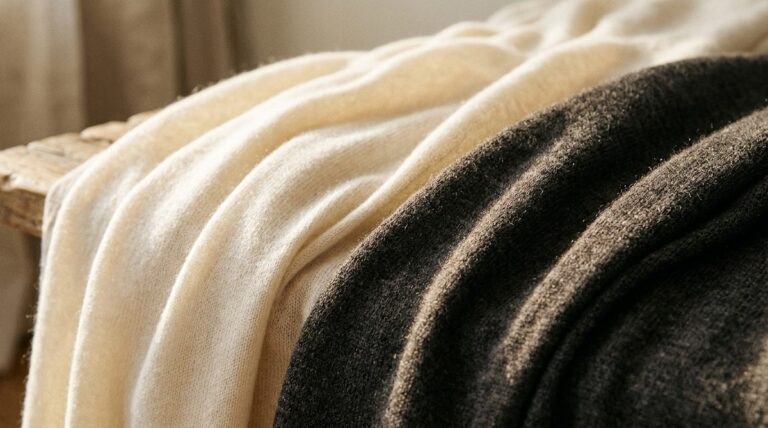
Untreated Merino Wool
Thermoregulating and odor-resistant; avoid harsh chemical “machine-washable” coatings (Mellow Mile). Best for winter sweaters and base layers.
Linen & Hemp
Airy, durable, and very low chemical footprint—hemp grows without synthetic pesticides (The Good Trade). Best for tailored trousers and overshirts.
Bamboo Viscose
Ultra-soft and cooling, but semi-synthetic pulping creates medium processing risk (Natural Clothing Company). Verify OEKO-TEX Standard 100 for loungewear.
PFAS-Free Technical Shells
Uses fluorine-free bio-based polyurethanes, polyacrylates, waxes, or silicone DWR (bluesign). Check for bluesign® PRODUCT (PFAS-restricted as of Jan. 2026).
4-Step Low-Tox Shopping & Laundry Checklist
- Upgrade high-contact layers first: Start with underwear, bras, pajamas, and gym wear before replacing coats (Mellow Mile).
- Trust third-party certifications over buzzwords: Look for GOTS (organic fibers + chemical limits), OEKO-TEX Standard 100 (finished-fabric testing for formaldehyde, heavy metals, azo dyes), and bluesign® (input-stage PFAS restriction) (Mellow Mile; bluesign).
- Skip vague finish claims: Avoid “stain-proof” or “wrinkle-free” unless a PFAS-free finish is disclosed (Natural Clothing Company).
- Wash new garments smartly: Wash separately with fragrance-free detergent and an extra rinse, and skip dryer sheets that coat clean fibers in waxy fragrance (Natural Clothing Company).
Frequently Asked Questions :
Can washing new clothes remove PFAS and other toxic chemicals?
Washing flushes out loose dyes and water-soluble processing aids, but cannot strip heat-cured wrinkle resins or bonded PFAS coatings—choosing certified PFAS-free garments upfront is the only reliable fix (Mellow Mile; Natural Clothing Company).
Is 100% cotton always non-toxic?
Not automatically. Even 100% cotton can carry formaldehyde anti-wrinkle resins or stain-repellent finishes; look for GOTS or OEKO-TEX Standard 100 tags (Natural Clothing Company).
Are PFAS-free rain jackets actually effective in 2026?
Yes. Modern fluorine-free finishes—such as bio-based hyperbranched polyurethanes (many over 70% bio-based and durable past 20 washes) and silicone repellents—deliver strong water repellency without forever chemicals (bluesign).