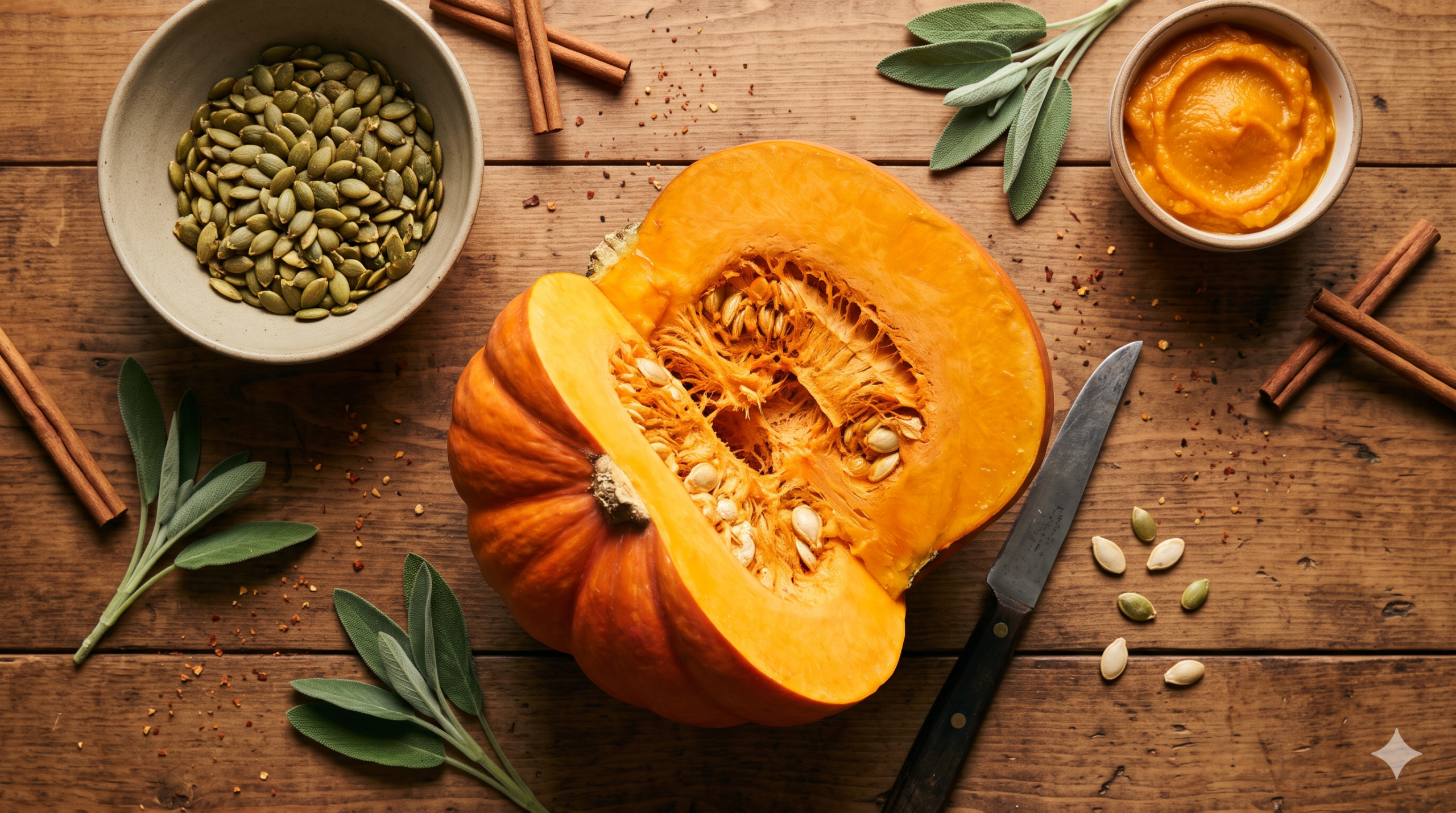
10 Surprising Health Benefits of Pumpkin and Pumpkin Seeds
Most Americans associate pumpkin with sugary lattes, spiced pies, and porch jack-o’-lanterns—which makes it easy to forget that plain pumpkin and its seeds are two of the most nutrient-dense foods in the grocery store. Beneath that bright orange rind sits a low-calorie, high-fiber winter squash packed with vitamin A and potassium, while its seeds (pepitas) deliver concentrated plant protein, magnesium, and zinc.
Understanding the real health benefits of pumpkin means separating nutrition science from seasonal hype. Pumpkin will not cure or prevent diseases on its own, but adding 100% pure pumpkin and unsalted pumpkin seeds to balanced everyday meals offers meaningful, research-backed support for your eyes, heart, digestion, and overall health.
In This Article
- Nutritional Value of Pumpkin and Pumpkin Seeds (USDA Data)
- 10 Science-Backed Health Benefits of Pumpkin and Pumpkin Seeds
- Pure Canned Pumpkin vs. Pumpkin Pie Filling: Read the Label
- Healthy Ways to Eat Pumpkin and Pepitas Every Day
- Allergies, Precautions, and Who Should Limit Pumpkin
- Frequently Asked Questions
Nutritional Value of Pumpkin and Pumpkin Seeds (USDA Data)
Pumpkin flesh and pumpkin seeds complement each other nutritionally: the flesh is roughly 90% water and very low in calories, while the seeds are energy-dense powerhouses of minerals and healthy unsaturated fats (USDA FDC 168450; USDA FDC 170557).
| Nutrient | 1 Cup Pure Canned Pumpkin (245 g) | 1 oz Roasted Shelled Pepitas (28.35 g) |
| Calories | 83 kcal | 163 kcal |
| Protein | 2.7 g | 8.5 g |
| Total Fat | 0.7 g | 13.9 g (~11.5 g unsaturated) |
| Carbohydrates | 19.8 g | 4.2 g |
| Dietary Fiber | 7.1 g (25% DV) | 1.8 g (shelled) / ~5.2 g (with shells) |
| Vitamin A (RAE) | 1,910 mcg (212% DV) | Trace |
| Vitamin C / Vitamin E | 10.3 mg (11% DV) / 2.6 mg (17% DV) | Trace / ~0.6 mg |
| Potassium | 505 mg (11% DV) | 223 mg |
| Magnesium | 56 mg | 156 mg (37% DV) |
| Zinc / Iron | 0.4 mg / 3.4 mg (19% DV) | 2.2 mg (20% DV) / 2.3 mg (13% DV) |
| Phosphorus | 86 mg | 333 mg (27% DV) |
Note: Whole roasted pumpkin seeds eaten with their shells supply about 5.2 g of fiber per ounce versus 1.8 g for shelled pepitas (American Heart Association).
10 Science-Backed Health Benefits of Pumpkin and Pumpkin Seeds
1. Supports Eye Health and Low-Light Vision
Pumpkin owes its deep orange color to beta-carotene, which your body converts into vitamin A—essential for normal vision and adapting to dim light (NIH ODS – Vitamin A). Pumpkin also provides lutein and zeaxanthin, carotenoids that concentrate in the retina’s macula and help filter light-induced oxidative stress (Cleveland Clinic; PubMed Carotenoids Review). Long-term AREDS/AREDS2 data associate higher dietary intakes of these carotenoids with lower risk of progressing to late age-related macular degeneration, though food supports eye health rather than treating existing eye disease (NIH ODS).
2. Promotes Digestive Regularity and Gut Support
One cup of pure canned pumpkin delivers 7.1 grams of fiber—a full quarter of the adult Daily Value—while an ounce of whole in-shell pumpkin seeds adds another 5.2 grams (USDA FDC 168450; American Heart Association). Pumpkin supplies both soluble fiber, which nourishes beneficial gut bacteria, and insoluble fiber, which adds bulk to stool and supports regular bowel movements (Mayo Clinic – Dietary Fiber).
3. Supports Heart Health and Healthy Blood Pressure
Pumpkin works for cardiovascular health from two angles. First, canned pumpkin offers 505 mg of potassium with just 12 mg of sodium, helping balance sodium intake and support healthy blood pressure (NIH ODS – Potassium; Harvard T.H. Chan). Second, pumpkin seeds provide magnesium (37% DV/oz), unsaturated fats, and naturally occurring phytosterols (~265 mg per 100 g), plant compounds that compete with dietary cholesterol for absorption as part of a plant-forward diet (Harvard Health; PubMed – Phillips et al.).
4. Strengthens Everyday Immune Defenses
Between pumpkin flesh and seeds, you get four key immune-supporting micronutrients: vitamin A (212% DV/cup), vitamin C (11% DV), vitamin E (17% DV), and zinc (20% DV per ounce of pepitas) (USDA FDC 168450; USDA FDC 170557). These nutrients help maintain protective mucous barriers and support normal white blood cell activity (NIH ODS – Immune Function).
5. Aids Healthy Weight Management and Satiety
At just 83 calories per full cup with high water content and 7.1 grams of fiber, pure pumpkin is a textbook low-energy-density food that adds satisfying volume to meals without piling on calories (Mayo Clinic – Energy Density). Just keep an eye on seed portions: pepitas are filling thanks to their 8.5 grams of protein per ounce, but at 163 calories per ounce, measuring a small handful helps keep calories in check (Cleveland Clinic – Pumpkin Seeds).
6. Supports Skin Integrity and Basal Antioxidant Defense
Vitamin C is essential for collagen synthesis and wound healing, while vitamin E helps protect skin cell membranes from oxidative stress (NIH ODS – Vitamin C; NIH ODS – Vitamin E). Clinical reviews also show that regular intake of dietary beta-carotene modestly boosts the skin’s basal defense against UV-induced redness—though researchers emphasize it is never a substitute for broad-spectrum sunscreen (PubMed – Stahl & Sies).
7. May Support Restful Sleep
Pumpkin seeds naturally supply tryptophan—an amino acid the body uses to make serotonin and melatonin—alongside magnesium and zinc (Cleveland Clinic – Pumpkin Seeds). Observational studies link higher dietary magnesium with better sleep quality, though clinical trials on magnesium for insomnia remain mixed (PubMed – Zhang et al.; PubMed – Arab et al.). Think of toasted pepitas as a smart evening snack, not a standalone sleep treatment.
8. Supports Healthy Blood Sugar and Metabolism
Plain pumpkin has a low glycemic load, and its fiber helps slow carbohydrate absorption (Harvard T.H. Chan). Meanwhile, pepitas are low in carbs (4.2 g/oz) and rich in magnesium, a mineral vital for insulin sensitivity; observational research consistently associates higher magnesium intake with a lower risk of developing type 2 diabetes (NIH ODS – Magnesium).
9. Contributes to Bone and Muscle Health
Over half of the body’s magnesium is stored in bone, where it works alongside phosphorus (27% DV/oz in pepitas) and zinc (20% DV/oz) to support bone mineral density and tissue maintenance (NIH ODS – Magnesium; NIH ODS – Phosphorus). Potassium in pumpkin flesh also plays a direct role in normal muscle contraction (Mayo Clinic Health System).
10. May Offer Modest Urinary and Prostate Support
Several human trials have examined whole pumpkin seeds and pumpkin seed oil for lower urinary tract symptoms tied to benign prostatic hyperplasia (BPH) and overactive bladder. A 12-month randomized trial of 1,431 men found whole pumpkin seed (5 g twice daily) improved symptom scores more than placebo (PubMed – Vahlensieck et al.), while a 2021 trial found pumpkin seed oil eased symptoms but was less effective than standard prescription tamsulosin (PubMed – Zerafatjou et al.). Pumpkin seeds are a nutritious dietary addition, never a replacement for medical evaluation or prescribed urologic care.
Pure Canned Pumpkin vs. Pumpkin Pie Filling: Read the Label
Many autumn “pumpkin” products contain far more added sugar than actual squash. Before buying canned pumpkin, check that pumpkin is the only ingredient:
- 1 cup 100% pure canned pumpkin: 83 calories, 19.8 g carbs, 0 g added sugar, 12.2 mg sodium (USDA FDC 168450).
- 1 cup canned pumpkin pie mix: 281 calories, 71.3 g carbs, added sugars/syrups, and 562 mg sodium (USDA FDC 169273).
Healthy Ways to Eat Pumpkin and Pepitas Every Day
- Upgrade breakfast bowls: Swirl pure pumpkin puree, cinnamon, and nutmeg into plain Greek yogurt or oatmeal, topped with a tablespoon of toasted pepitas (Cleveland Clinic).
- Thicken savory sauces: Stir half a cup of pure pumpkin into marinara, turkey chili, or lentil curry for velvety texture without heavy cream.
- Roast sugar pumpkins: Cube small “pie” or sugar pumpkins (sweeter and less stringy than carving pumpkins) and roast with olive oil and sage (Harvard T.H. Chan).
- Swap in baking: Replace part of the butter or oil in whole-grain muffins or pancakes with pure pumpkin puree.
- Toast your own seeds: Toss rinsed seeds with a teaspoon of olive oil and chili powder, garlic, or cinnamon instead of heavy salt (American Heart Association).
Allergies, Precautions, and Who Should Limit Pumpkin
- Allergies and Oral Allergy Syndrome: Though uncommon, true allergies to pumpkin flesh or pumpkin seeds can trigger severe reactions (PubMed – Figueredo et al.). People with ragweed allergies may also experience mild mouth itching from raw squash (cooking usually reduces this) (AAAAI).
- Chronic Kidney Disease (CKD): Because pumpkin is high in potassium (505 mg/cup) and pepitas are high in phosphorus (333 mg/oz), people with impaired kidney function or hyperkalemia should check with their doctor or renal dietitian before eating them regularly (MedlinePlus – CKD Diet; Cleveland Clinic – Renal Diet).
- Potassium-sparing medications: Anyone taking ACE inhibitors, ARBs, or potassium-sparing diuretics should monitor total dietary potassium with their clinician (NIH ODS – Potassium).
- Sodium and digestive comfort: Avoid heavily salted packaged pumpkin seeds, and increase high-fiber whole seeds gradually with plenty of water to prevent bloating (Mayo Clinic).
Frequently Asked Questions
1. Is canned pumpkin as nutritious as fresh pumpkin?
Yes—in fact, 100% pure canned pumpkin is slightly more concentrated than boiled fresh pumpkin, supplying more fiber (7.1 g vs. ~3 g per cup) and beta-carotene, as long as you avoid sugary pumpkin pie filling.
2. Are pumpkin seeds healthier with or without the shell?
Both are nutritious. Whole roasted seeds with shells provide nearly triple the fiber (~5.2 g vs. 1.8 g per ounce), while shelled pepitas are easier to digest and sprinkle onto salads, yogurt, and oatmeal.
3. Can eating too much pumpkin turn your skin orange?
In large, daily amounts over weeks, beta-carotene-rich foods can cause a harmless, temporary yellow-orange tint to the skin called carotenemia, which fades once you cut back.
4. Are pumpkin seeds good for weight loss?
They can support weight management because their protein and unsaturated fats help keep you full, provided you stick to a measured 1-ounce serving (~163 calories).
5. Can pumpkin seeds cure an enlarged prostate?
No. While clinical trials show whole pumpkin seeds may modestly reduce mild urinary symptoms, they are less effective than standard prescription medications and should never replace medical care.
Conclusion
The health benefits of pumpkin and pumpkin seeds go far beyond fall comfort food. Together, they deliver an impressive blend of beta-carotene, dietary fiber, potassium, magnesium, zinc, and plant protein—all for a few dollars at any U.S. supermarket. Reach for 100% pure canned pumpkin and unsalted pepitas year-round, and you have one of the easiest, most versatile nutritional upgrades in your kitchen.
SOURCES & FURTHER READING
- USDA FoodData Central – Pumpkin, Canned, Without Salt (FDC 168450)
- USDA FoodData Central – Pumpkin and Squash Seed Kernels, Roasted, Without Salt (FDC 170557)
- USDA FoodData Central – Pumpkin Pie Mix, Canned (FDC 169273)
- NIH Office of Dietary Supplements – Vitamin A and Carotenoids
- NIH Office of Dietary Supplements – Magnesium
- NIH Office of Dietary Supplements – Potassium
- NIH Office of Dietary Supplements – Immune Function
- Harvard T.H. Chan School of Public Health – Winter Squash
- Harvard Health Publishing – Seed of the Month: Pumpkin Seeds
- American Heart Association – Pumpkin Seeds Pack a Healthy Punch
- Cleveland Clinic – The Truth About the Great Pumpkin
- Cleveland Clinic – Pumpkin Seeds: Health Benefits and Nutrition
- Mayo Clinic – Dietary Fiber: Essential for a Healthy Diet
- MedlinePlus – Diet for Chronic Kidney Disease
- PubMed – Vahlensieck et al. (2015), Effects of Pumpkin Seed in Men with LUTS/BPH
- PubMed – Zerafatjou et al. (2021), Pumpkin Seed Oil vs. Tamsulosin in BPH