Inside America’s Time Capsule (1776–2276): The 900-Pound Vault, Synthetic DNA, and the Doomed iPhone Buried Until 2276
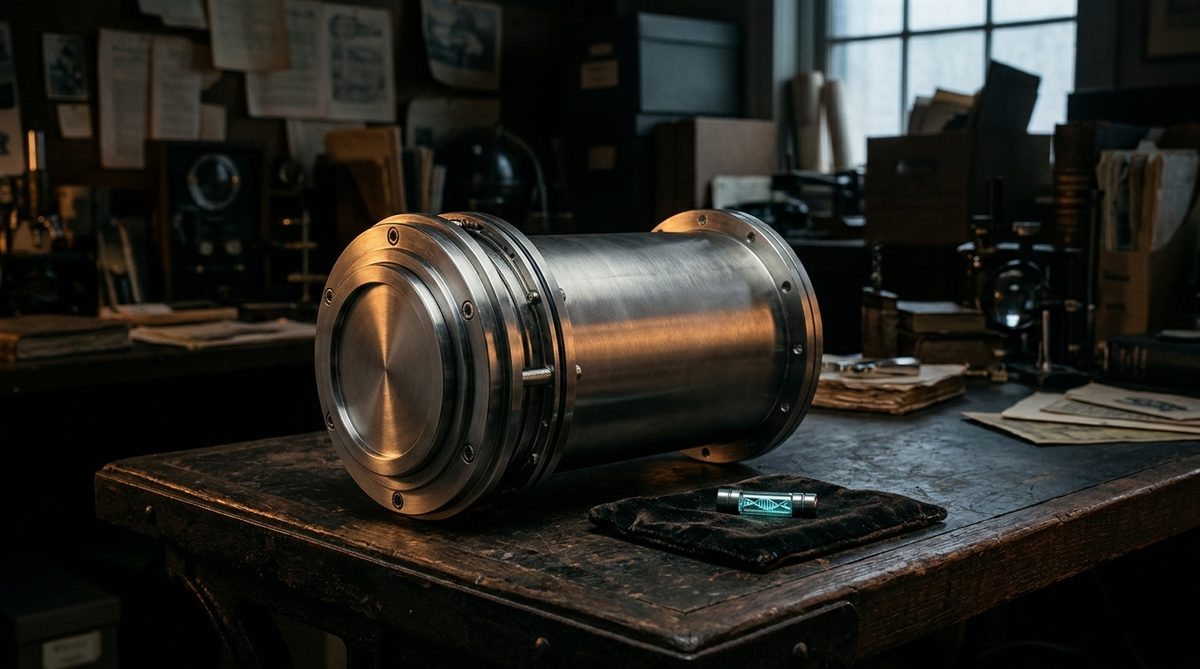
Quick answer : Buried at Independence National Historical Park in Philadelphia on July 4, 2026, America's Time Capsule is a 900-pound NIST-engineered stainless-steel vault containing nearly 200 items from all 50 states, D.C., and five U.S. territories—including a pencil-eraser-sized Library of Congress synthetic DNA vial and an orange iPhone 17 Pro Max—sealed for 250 years until July 4, 2276.
As the United States closes out its 250th anniversary year, one of the most intriguing artifacts of 2026 is already invisible—sitting beneath the soil near Independence Hall in Philadelphia. Mandated by Congress in 2016, sealed at the National Institute of Standards and Technology (NIST) in Gaithersburg, Maryland in June 2026, and lowered underground on July 4, 2026 (America250), the vault is designed to stay untouched until 2276. Yet local news blurbs barely scratched the surface of what is inside America’s Time Capsule 2026—or the wild materials-science gamble required to keep it intact for two and a half centuries.
The “115-Year Alloy” Engineering Paradox
Building a box that survives 250 years underground is harder than it sounds. As NIST engineers pointed out, stainless steel itself was only invented around 1911—meaning as of 2026, humanity has only observed stainless steel for 115 years, less than half the time this capsule must endure wet Philadelphia soil.
To stack the odds in 2276’s favor, NIST’s Fabrication Technology Office machined a 900-pound (~400 kg) stainless-steel inner cylinder sealed with indium—a soft metal that deforms under bolt compression to plug microscopic surface grooves. Then, before burial, engineers lowered a 1,100-pound stainless-steel bell jar over the cylinder, borrowing the physics of historic underwater diving bells to trap a permanent dry air pocket that keeps groundwater away from the seal (NIST).
Synthetic DNA vs. Silicon: What Will Still Work in 2276?
Inside, nearly 200 contributions from all three federal branches, all 50 states, D.C., and five territories sit in 6″ × 4″ × 2″ archival boxes—ranging from a 2026 Rose Parade flag, a glass Coca-Cola bottle with sheet music, and a 2026 NFL playoffs coin to letters from MLB, NBA, and NHL commissioners (America250; PPAI).
Two tech artifacts tell an unforgettable story side by side. One is an orange iPhone 17 Pro Max (iGeeksBlog)—a cultural icon whose lithium-ion battery and flash memory will almost certainly be dead centuries before 2276. Sitting alongside it is a tiny metal vial roughly the size of a pencil eraser created by the Library of Congress and the University of Washington’s Molecular Information Systems Lab. Encoded into synthetic DNA inside that vial are digital treasures meant to outlast silicon: Thomas Jefferson’s rough draft of the Declaration of Independence, Francis Scott Key’s handwritten lyrics for The Star-Spangled Banner, an 1898 John Philip Sousa band audio recording, a 3D rendering of Abraham Lincoln’s hand, the 1791 L’Enfant Plan for Washington, D.C., 1890 Passamaquoddy Native American recordings, and the Codex Quetzalecatzin (Library of Congress Blogs).
When America opened its 1876 Centennial Safe a century later, officials had to track down a missing key—and a forgotten 1976 Bicentennial capsule is still waiting in the National Archives for July 4, 2075.
The 3-Capsule American Trilogy (and the 2026 “Second Capsule” Twist)
America’s 2026 vault joins a surprisingly quirky national tradition documented in an October 28, 2026 Congressional Research Service report:
- 1876 Centennial Safe: Organized by magazine publisher Anna Deihm and sealed in the Capitol in 1879, it stayed shut until Congress opened its outer doors in January 1976 and President Gerald Ford unlocked its inner glass doors on July 1, 1976 (CRS R48473)—after officials famously scrambled to find the missing key (Smithsonian Sidedoor).
- 1976 Bicentennial Capsule: One of 56 Reynolds Metals capsules from 1976 still rests inside the National Archives, scheduled to open on July 4, 2075 (Legis1).
- The 2026 Twin Vault Twist: Most people do not realize Congress actually authorized two Semiquincentennial capsules—America250’s buried Philadelphia vault plus a separate Congressional Time Capsule (Legis1).
Common Questions About America’s Time Capsule 2026:
When will America’s 250th anniversary time capsule be opened?
It is scheduled to remain sealed for 250 years and open on July 4, 2276, for the nation’s 500th anniversary (America250).
Where is America’s Time Capsule buried?
It was buried at Independence National Historical Park in Philadelphia, Pennsylvania, on July 4, 2026 (America250).
How did the Library of Congress store the Declaration of Independence in DNA?
Partnering with the University of Washington, it translated digitized historical files into binary code mapped onto synthetic DNA strands sealed inside a pencil-eraser-sized metal vial (Library of Congress).
What happened to America’s 1876 and 1976 anniversary time capsules?
The 1876 Centennial Safe was opened in 1976 by President Gerald Ford and is on display at the U.S. Capitol Visitor Center, while the 1976 National Bicentennial Time Capsule waits at the National Archives until July 4, 2075 (Legis1).