Exercise Snacks: Can 1–2 Minutes of Movement Really Work?
You know you should exercise. You also know you will not find 45 free minutes today — between work, meals, and the dark winter evenings, the gym keeps losing to real life. Here is the good news: the research on exercise snacks benefits is now strong enough to take seriously. A burst of movement lasting just one to five minutes, repeated a few times a day, can measurably improve your fitness — no gym, no outfit change, no shower required.
That is not a social media slogan. It is the conclusion of a 2026 meta-analysis in the British Journal of Sports Medicine and a consensus statement from 48 researchers in the December 2026 issue of the Journal of Sport and Health Science. This article explains what exercise snacks are, what the newest studies actually found, where the evidence still falls short, and how to build a one-week starter plan around your normal day.
What Is an Exercise Snack?
An exercise snack is a very short burst of purposeful movement — usually between 20 seconds and 5 minutes — repeated at several points through your day. It is not a snack you eat before a workout. It is the workout, shrunk down to a size that fits between two meetings. The exercise snacks benefits add up across the day, even though no single burst feels like a workout.
Typical snacks include:
- Stair bursts: walking or jogging up one or two flights of stairs, fast enough to get slightly breathless
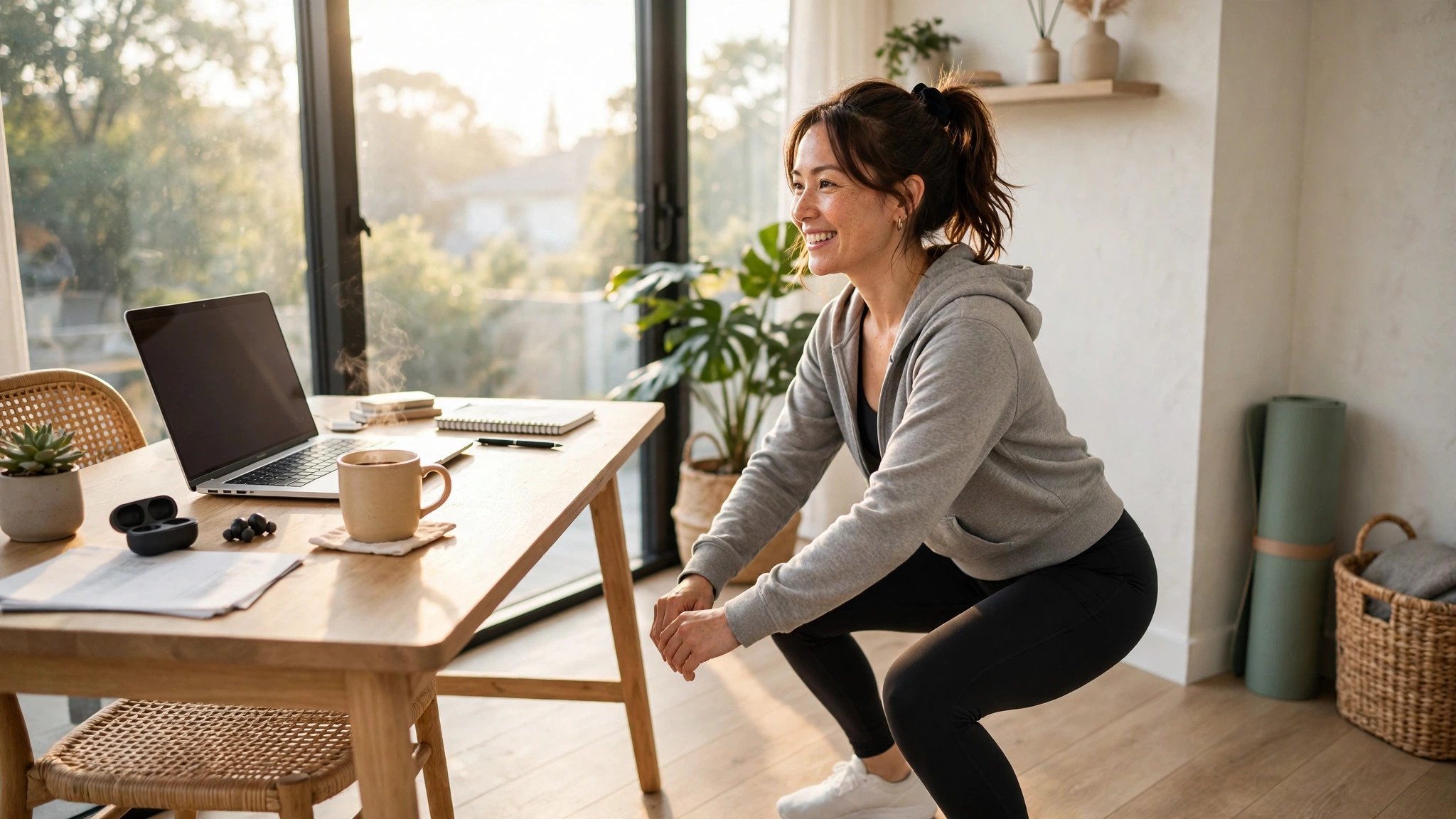
- Bodyweight moves: 20–30 squats, wall push-ups, lunges, or marching in place
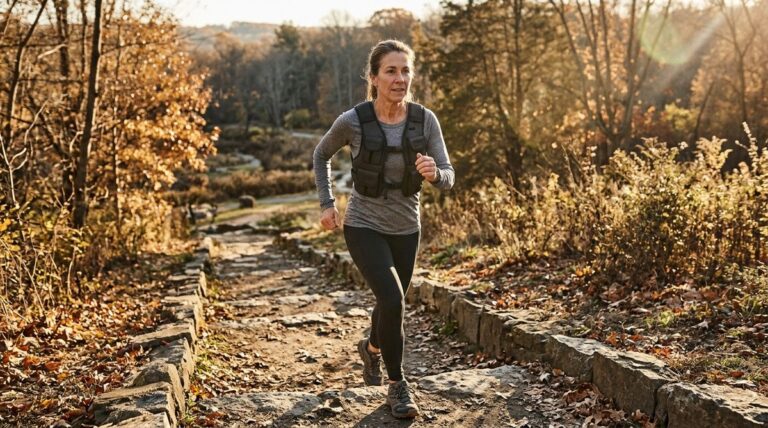
- Brisk walking: one fast block, a walk to the far bathroom, or a lap around the office
- Household effort: carrying groceries, vacuuming briskly, or gardening with intent
The common thread is simple: short, frequent, and effortful enough to raise your heart rate. Researchers call them “short bouts of accumulated exercise,” and the US Physical Activity Guidelines have counted sessions shorter than 10 minutes toward your weekly total since 2018. The target is at least 150 minutes of moderate activity a week — and snacks are one way to collect those minutes without ever blocking out an hour.
Exercise Snacks Benefits: What the 2026 Research Found
The strongest evidence comes from a 2026 systematic review and meta-analysis in the British Journal of Sports Medicine. The researchers pooled 11 randomised controlled trials covering 414 physically inactive adults, most of them women. In these trials, exercise snacks meant structured bouts of 5 minutes or less, done at least twice a day, at least 3 days a week, for 2 to 12 weeks.
The headline result: cardiorespiratory fitness — how well your heart and lungs deliver oxygen during effort — improved significantly, with a large pooled effect and moderate certainty of evidence. In older adults, muscular endurance improved too. Perhaps most encouraging for real life, people actually stuck with it: adherence averaged about 83%, far higher than most gym programs manage.
A second, bigger piece of evidence arrived in the December 2026 issue of the Journal of Sport and Health Science. A review and consensus statement from 48 researchers found that short bouts had beneficial acute effects on more than 10 clinical biomarkers covering endocrine, cardiovascular, and brain health. In longer interventions averaging 11 weeks, quick frequent bouts improved more than 20 health outcomes, including cardiorespiratory fitness, muscle strength and function, and metabolic health. The authors even suggested short spurts may have an edge over longer workouts for blood sugar control.
A practical head-to-head test backs up the “as good as” claim. In a July 2026 study in Frontiers in Public Health, 30 female college students with overweight or obesity did 75 minutes of bodyweight exercise a week for 8 weeks — jumping jacks, high-knee taps, squats. Half did it in bursts of 3 minutes or less; the other half did three 25-minute high-intensity sessions. After 8 weeks, both groups improved equally in body composition, fitness, lower-body power, blood pressure, and cholesterol. The difference? The snack group said the sessions felt less difficult. Easier to do, same result — that is exactly why snacks work for busy people.
Exercise Snacks Benefits for Blood Sugar
Blood sugar is where the exercise snacks benefits show up fastest, and it matters most for the millions of Americans with prediabetes or type 2 diabetes.
In an April 2026 study in Diabetologia, 31 people with type 2 diabetes did just four 1-minute bouts of vigorous bodyweight exercise per day for two days. Compared with two days of no exercise, they showed small but significant improvements in blood sugar control after meals and in day-to-day glucose variability. Four minutes a day. That is the whole dose.
The reason is mechanical, not magic. Prolonged sitting makes your muscles’ insulin receptors less sensitive. Activating the muscles — even briefly — increases glucose uptake during the movement and for several hours afterward. Timing the snack shortly after a meal appears to help even more, because that is when blood sugar is climbing.
A short walk after meals is one of the easiest snacks of all: small studies suggest post-meal walking blunts the rise in blood glucose after eating, and you are already standing up from the table. Ten minutes is a useful example, not a magic threshold — even a few brisk minutes count.
The Sitting Problem: Why Short Breaks Beat the Workout You Skip
Here is the uncomfortable fact behind the trend: sitting itself is the problem, and one evening workout does not fully cancel eight hours in a chair. Prolonged uninterrupted sitting predicts metabolic harm and low mood partly independently of whether you exercise later. What fixes it is interruption — every 30 to 60 minutes.
A June 2026 study in the British Journal of Sports Medicine tested this in the real world. More than 11,000 workers aimed to take 5-minute walk breaks every 30, 60, or 90 minutes. Few stuck to the schedule perfectly — the biggest barrier was simply forgetting — but those in the 30- or 60-minute groups still reported less fatigue, better mood, and improved productivity after two weeks. In lab studies, 1-minute walk breaks every hour reduced systolic blood pressure, and 5-minute breaks every 30 minutes lowered blood glucose.
Then there is the striking wearable data. In studies of more than 25,000 UK adults who described themselves as non-exercisers, researchers tracked the unplanned hard moments of ordinary life — stair bursts, rushing for a bus, carrying something heavy. People who logged 3–4 one-minute vigorous bursts a day had 25–30% lower all-cause mortality and up to about 40% lower cardiovascular mortality than people who logged none. These are associations from observational data, not proof that the bursts caused the difference — but the dose is so small that the finding has reshaped how researchers think about fitness. Minutes per day. In people who would never call it exercise.
Zoom out further and the numbers get bigger. A January 2026 analysis in The Lancet estimated that if the least active people added just 5 minutes of moderate-to-vigorous activity a day, it could theoretically avert 6% of deaths in the population. If everyone except the most active added 5 minutes, it could prevent 10%. The largest health gains come from going from nothing to something — and a snack is the smallest possible something.
That is also why snacks pair well with winter health habits. Short days and weak sun leave many Americans low on vitamin D, and our guide to winter vitamin D explains why that matters and how to fix it safely — a midday snack walk outside does double duty for daylight and movement.
What Exercise Snacks Cannot Do (Yet)
Honest reporting means saying what the evidence does not show. The 2026 British Journal of Sports Medicine meta-analysis found no significant effect on body composition, blood pressure, or blood lipids. A separate 2025 meta-analysis of 27 studies did report benefits across several cardiometabolic markers — the reviews disagree, and the truth is probably that short trials of a few weeks are too brief to move those numbers much.
Other limits worth knowing:
- The trials are small and short. Most lasted 4 to 12 weeks, with a few hundred participants total. Longer studies are still needed to see whether the benefits last.
- Not every trial agrees. One independent review noted two 12-week trials in middle-aged adults where vigorous snacks were no better than stretching. Results vary by age, fitness, and how hard people actually push.
- The reviews overlap. At least eight meta-analyses of exercise snacks appeared in 2025–2026, but they pool many of the same small trials — so they are not eight independent confirmations.
- Snacks are not a full replacement. The researchers are clear: longer workouts still have their place, and snacks do not cover everything in the activity guidelines. Strength training on two or more days a week still matters, and your genes set a starting point for heart risk that movement alone cannot rewrite.
Important: This article is general health education, not medical advice. If you have heart disease, diabetes, uncontrolled blood pressure, joint problems, or you are pregnant — or you are over 65 and new to exercise — talk to your clinician before starting vigorous bursts. Start gently, and stop if you feel chest pain, dizziness, or unusual breathlessness.
How to Start: A 7-Day Exercise Snacks Plan
The best plan is the one you will actually do. Start embarrassingly small, anchor each snack to something you already do, and add one snack a day.
- Day 1 — After breakfast: Walk briskly around the block once, or march in place for 2 minutes while the coffee brews. One snack, done.
- Day 2 — Add a stair snack: After lunch, take the stairs up one flight at a brisk pace instead of the elevator. If you work from home, do 20 squats by your desk.
- Day 3 — Add a post-dinner walk: A 5-minute walk after dinner doubles as a blood sugar snack and a wind-down. Our guide to walking after meals explains how to keep it low-pressure.
- Day 4 — Add a strength snack: Between meetings, do 10 wall push-ups and 10 chair squats. Two minutes, no equipment, no sweat.
- Day 5 — Set a reminder: The June 2026 walk-break study found the biggest barrier was forgetting. Set a phone alarm for every hour, or move a bracelet from one wrist to the other after each snack as a visual cue.
- Day 6 — Make one snack vigorous: Pick one burst — a fast stair climb, 30 seconds of jumping jacks — and push hard enough to get slightly breathless. That is the intensity linked to the biggest benefits.
- Day 7 — Count your week: Add up the minutes. Three 2-minute snacks a day is 42 minutes a week — more than a quarter of the 150-minute weekly target, collected in pieces you barely noticed. Next week, add one more snack a day.
A few practical rules: wear shoes you can move in, keep the effort at a level where you can still speak in short sentences, and never let a missed snack become a reason to quit. The exercise snacks benefits add up fastest when the habit survives a bad day — one missed burst changes nothing, but a skipped week changes everything.
Quick Guide to Exercise Snacks
| Question | Short answer |
|---|---|
| What is an exercise snack? | A 20-second to 5-minute burst of movement, repeated several times a day |
| What are the main exercise snacks benefits? | Better cardiorespiratory fitness (strongest evidence), better blood sugar control, less fatigue, better mood |
| What did the 2026 research find? | A BJSM meta-analysis of 11 trials (414 people) found fitness improved significantly; adherence was ~83% |
| How many snacks a day? | Start with 3 a day; researchers studied at least 2 a day, at least 3 days a week |
| Can snacks replace a full workout? | Not entirely — they are a powerful start and complement, not a complete replacement |
| Do they help blood sugar? | Yes — even four 1-minute bouts a day improved post-meal glucose in a 2026 diabetes study |
| Who should check with a doctor first? | Anyone with heart disease, diabetes, uncontrolled blood pressure, joint problems, or who is pregnant or over 65 and new to exercise |
Frequently Asked Questions
Are exercise snacks benefits proven?
Partly, and the strongest part is fitness. A 2026 meta-analysis in the British Journal of Sports Medicine pooled 11 randomised trials with 414 inactive adults and found moderate-certainty evidence that exercise snacks significantly improve cardiorespiratory fitness. Evidence for weight, blood pressure, and cholesterol is mixed — one review found no effect, another found benefits — so do not start snacking expecting the scale or your blood pressure to move on their own. The honest summary: fitness improves, blood sugar control improves, and the rest is still being studied.
How long should an exercise snack be?
Between 20 seconds and 5 minutes. The strictest research definition is 1 minute or less of vigorous effort, but the trials that showed fitness gains used bouts of up to 5 minutes, at least twice a day. A 1-minute stair climb and a 5-minute brisk walk both count. What matters more than the exact length is that you do it often and hard enough to raise your heart rate.
Can 1 minute of exercise really do anything?
Yes, for some outcomes. In a 2026 Diabetologia study, four 1-minute vigorous bouts a day improved blood sugar control in people with type 2 diabetes. Wearable data from 25,000 non-exercisers linked 3–4 one-minute vigorous bursts a day with substantially lower mortality — though that is observational, not proof. One minute will not build much muscle or transform your body, but it is enough to wake up your metabolism and break a long stretch of sitting.
Are exercise snacks better than a 30-minute workout?
They are not better — they are different, and for many people they are more doable. In the July 2026 Frontiers in Public Health trial, 75 minutes a week of tiny bursts matched three 25-minute high-intensity sessions on fitness, body composition, and cholesterol — and the snack group found it easier. But longer workouts still have unique benefits, including dedicated strength training and endurance. The smart approach is snacks on busy days plus longer sessions when you have time.
What are the best exercise snacks for beginners?
Start with walking-based snacks: a brisk 2-minute walk, one flight of stairs, or marching in place. Add bodyweight moves — squats, wall push-ups, lunges — once the walking habit sticks. Keep the effort moderate at first: you should be able to speak in short sentences. If you have a medical condition, check with your clinician first, and build up gradually rather than going all-out on day one.
Conclusion
The 2026 evidence makes a simple case: exercise snacks benefits are real, measurable, and available to almost anyone. A meta-analysis of 11 trials found that bursts of 5 minutes or less significantly improved fitness in inactive adults, a diabetes study found four 1-minute bouts a day improved blood sugar control, and wearable data linked a few daily bursts with markedly lower mortality. The evidence is still young — small trials, short follow-ups, and honest disagreement about blood pressure and weight — but the direction is clear. You do not need an hour, a gym, or a new outfit to start. You need one minute, a flight of stairs, and a reminder to do it again tomorrow. If you have a health condition, check with your clinician first — then take the stairs.
Sources
- Rodríguez MÁ, Quintana-Cepedal M, Cheval B, et al. Effect of exercise snacks on fitness and cardiometabolic health in physically inactive individuals: systematic review and meta-analysis. British Journal of Sports Medicine, 2026;60(2):133–141. https://pubmed.ncbi.nlm.nih.gov/41057224/
- Exercise snacks may be stronger medicine than we thought — summary of the December 2026 Journal of Sport and Health Science consensus statement, the July 2026 Frontiers in Public Health trial, the April 2026 Diabetologia study, and the June 2026 British Journal of Sports Medicine walk-break study. Medscape, 23 Sep 2026. https://www.medscape.com/viewarticle/exercise-snacks-may-be-stronger-medicine-than-we-thought-2026a1000zg4
- Jin N, Zheng X, Zhao Z, et al. Effects of 75 min of weekly exercise snacks on body composition, cardiometabolic health, cardiorespiratory fitness, and lower-body explosive power in overweight and obese female university students. Frontiers in Public Health, 2026;14:1846870. https://www.frontiersin.org/journals/public-health/articles/10.3389/fpubh.2026.1846870/full
- Ekelund U, et al. Device-measured physical activity and mortality (January 2026 meta-analysis). The Lancet, 2026 — via Shaastra, IIT Madras. https://shaastramag.iitm.ac.in/lead-story/getting-shape
- VILPA (vigorous intermittent lifestyle physical activity) wearable studies, Stamatakis et al., UK Biobank — summary: https://www.simplypsychology.com/articles/movement-snacks-exercise-breaks
- Centers for Disease Control and Prevention — Physical Activity Guidelines for Adults: https://www.cdc.gov/physical-activity-basics/guidelines/