Inside the 4,700-Year-Old Kekova Island Shipwreck: A Bronze Age Time Capsule From the Dawn of the Pyramids
Long before modern navigation, a 33-foot wooden merchant vessel sailed along the jagged coastline of southern Anatolia. Carrying trade goods across the Mediterranean, the vessel sank in nearly 100 feet of water.
Archaeologists revealed details of its preserved cargo, establishing the site as a key candidate for the oldest known shipwreck ever discovered (Smithsonian Magazine). Dating to between 2700 BCE and 2400 BCE, the vessel sank during the same era that Egypt’s earliest stone pyramids were being constructed.
Key Takeaways
- Ancient Discovery: The Kekova Island wreck is estimated to be between 4,400 and 4,700 years old, placing it in the Early Bronze Age.
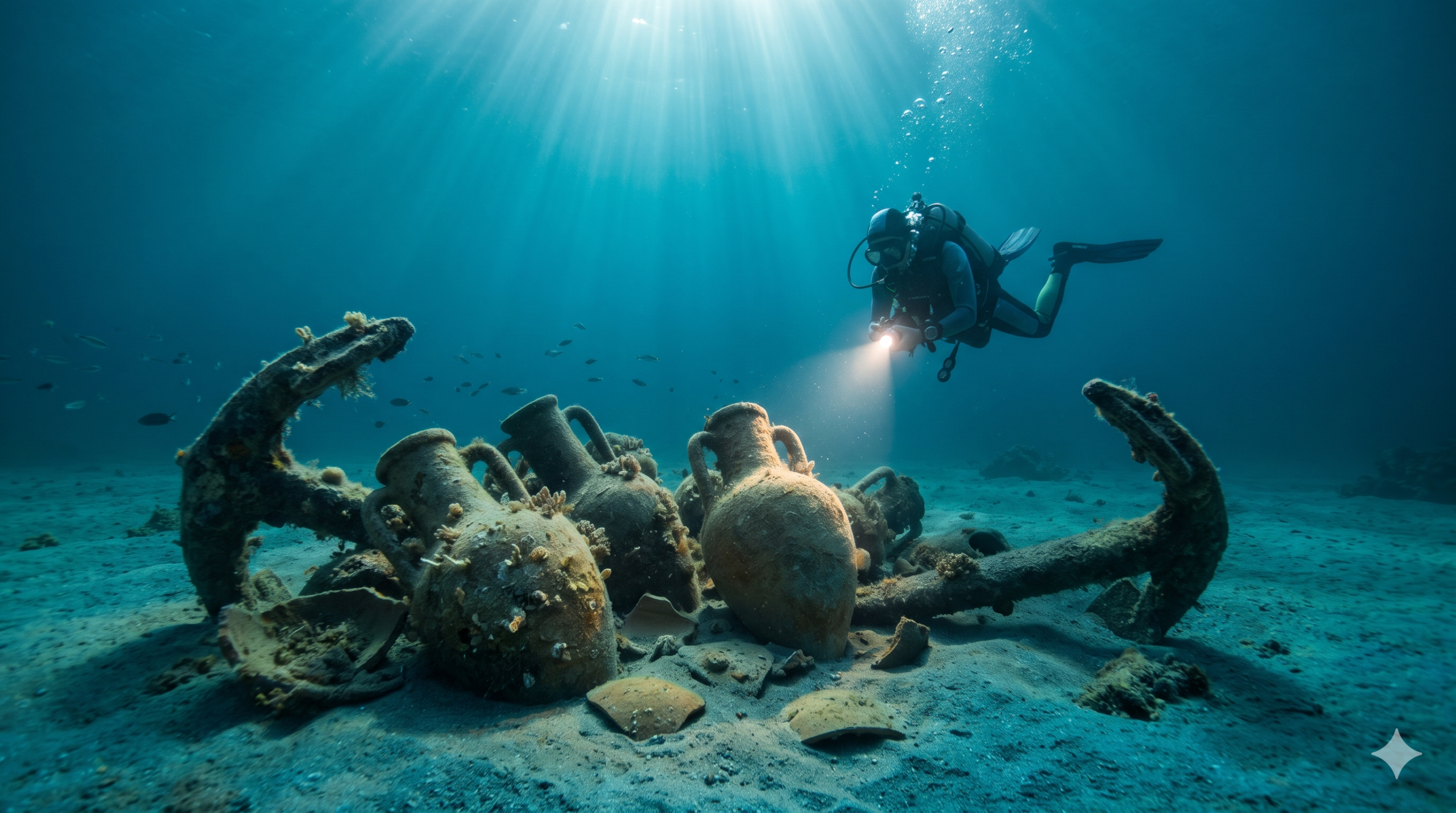
- Intact Cargo: More than 30 ceramic amphorae and three large stone anchors mark the footprint of the submerged vessel.
- Preserved Residue: Laboratory analysis of internal jar coatings offers rare direct evidence of Early Bronze Age liquid trade commodities.
How Do You Find a Shipwreck When the Ship Is Completely Gone?
In the warm, oxygenated waters of the Mediterranean, untreated wooden hulls decompose over centuries. While organic timbers typically do not survive, durable trade goods remain preserved on the seafloor.
Led by underwater archaeologist Hakan Öniz of Akdeniz University and the Mediterranean Archaeology Association, researchers surveyed a submerged cargo site containing over 30 two-handled ceramic amphorae and three large carved stone anchors (Smithsonian Magazine; Archaeology Magazine).
Archaeologists dated the site by analyzing the manufacturing techniques, handle shapes, and rim profiles of the recovered ceramics. These matches align directly with Early Bronze Age pottery artifacts cataloged across the Jordan Valley and the wider Levant.
Organic Residues Preserved in Ancient Jars
Laboratory inspection of recovered vessels yielded unexpected preservation results. Archaeologist Karin Sowada noted that several sealed jars retained thick, visible dregs of their original liquid contents along their interior walls (Smithsonian Magazine).
Subsequent chemical testing aims to identify markers for olive oil, wine, or fragrant resin commodities (Archaeology Magazine). Initial findings suggest these large storage vessels were routinely cleaned, refilled, and reused across multiple voyages before the ship sank.
Comparative Shipwreck Analysis
| Discovery Feature | Kekova Island Wreck (Turkey) | Dokos Shipwreck (Greece) |
|---|---|---|
| Estimated Age | ~4,400 to 4,700 Years Old | ~4,200 Years Old |
| Operating Era | Early Bronze Age (~2700–2400 BCE) | Early Helladic II Period (~2200 BCE) |
| Primary Artifacts Found | 30+ Levantine amphorae, 3 stone anchors | Early Aegean pottery cargo items |
| Historical Implications | Demonstrates early long-distance maritime trade connecting the Levant, Turkey, and the Aegean (Smithsonian Magazine). | Established initial physical evidence for Early Bronze Age maritime transport in Europe. |
What Life Aboard a 4,700-Year-Old Cargo Ship Looked Like
The physical layout of the artifact field suggests a small, single-masted sailing vessel measuring approximately 30 to 33 feet in length.
Sailing close to the shore, these vessels carried high-value commodities between Levantine ports and northern Aegean settlements like Troy or early Minoan communities on Crete. Cultural heritage officials note that crews on these long journeys likely lived on simple provisions, storing cheese, cured meats, and fresh water in smaller secondary jars kept on board (Smithsonian Magazine).
Frequently Asked Questions :
Why is the Kekova Island discovery historically significant?
It provides physical evidence that organized, long-distance maritime trade networks operated across the eastern Mediterranean earlier than previously confirmed by subsea archaeological sites.
What happened to the wooden hull of the ship?
Over four millennia, wood-boring marine organisms and exposure to salt water consumed the organic timber hull, leaving behind durable stone anchors and fired ceramic pottery.
How large was the ancient merchant ship?
Based on the distribution of its stone anchors and ceramic cargo on the seafloor, researchers estimate the vessel was roughly 30 to 33 feet long.